The Royal Staircase
Built between the 17th and 18th centuries, the grand staircase of Palazzo D'Avalos in Procida, the small Italian island just off the coast of Naples, has had a long history through the centuries.
Born for commercial purposes, the staircase changed and was modified several times to adapt to the needs of the royal families who inhabited the Palace. The importance of the site is reinforced by the intervention, under the Bourbon domination of the Kingdom of Naples, of some of the most important architects of the seventeenth and eighteenth centuries: Carlo Vanvitelli and Ferdinando Fuga.
Unfortunately, due to the transformation of the Palace into a prison in 1840, the staircase gradually fell into disuse and today the only surviving part is just a single arch of one of the ramps.
My thesis project, reported here in its result and its main stages, has progressed from studying and analyzing historical documents to the digital redesign of the staircase with the help of photogrammetric scans of the whole site and the study of buildings from a similar historic and geographical context.
Using then Blender as modeling software and Unreal Engine 5 for the final product and visualization, in Alpha and Beta phase, as graphics engine, I arrived at a final product fully usable digitally and License Free.
The hope behind this work is to contribute at least in part to the tourist-digital enhancement of the island of Procida, Italian Capital of Culture 2022.
Costruita tra il XVII e il XVIII secolo, lo scalone di Palazzo D'Avalos a Procida, la piccola isola italiana appena fuori la costa di Napoli, ha avuto una lunga storia attraverso i secoli.
Nata per scopi commerciali, la scala cambiò e fu modificata più volte per adattarsi alle esigenze delle famiglie reali che abitarono il Palazzo. L'importanza del sito è rafforzata dall'intervento, sotto la dominazione Borbonica del Regno di Napoli, di alcuni fra gli architetti più importanti del XVII e XVIII secolo: Carlo Vanvitelli e Ferdinando Fuga.
Purtroppo per via della trasformazione del Palazzo in Carcere nel 1840, la scala con il passare del tempo cadde in disuso ed oggi l'unica parte sopravvissuta è un unico arco di una delle rampe.
Il mio progetto di tesi, qui riportato nel suo risultato e nelle sue fasi principali, è passato dallo studio ed analisi di documenti storici alla riprogettazione digitale della scala con l'aiuto di scansioni fotogrammetriche del sito e studio di edifici di simile periodo e contesto storico-geografico.
Utilizzando quindi Blender come software di modellazione ed Unreal Engine 5 per il prodotto finale e la visualizzazione, in fase Alpha e Beta, come motore grafico, sono arrivato ad un prodotto finale completamente fruibile digitalmente e License Free.
Con questo lavoro la speranza è di contribuire almeno in parte alla valorizzazione turistico-digitale dell'Isola di Procida, Capitale Italiana della cultura 2022.
In order to obtain the final product, several phases of research, study and analysis have been carried out, passing then to the actual digital reconstruction and production.

The Palace nowdays.
The Prison was closed now 60 years ago, but the building has been left to ruin and almost nothing is left of the once astonishing staircase.

The study began from the iconographic sources, which allowed for a reading towards the final realization, providing a hugely valuable view over the completed layout in 1823.

Historical military maps from 1812-1814 allowed for the reconstruction and redesign of the stairway layout through a more technical view and analysis.

Several digital approaches have been carried out in order to obtain a first 3D model to work on. Placing then the first
grey volumes representing the different sections of the staircase.
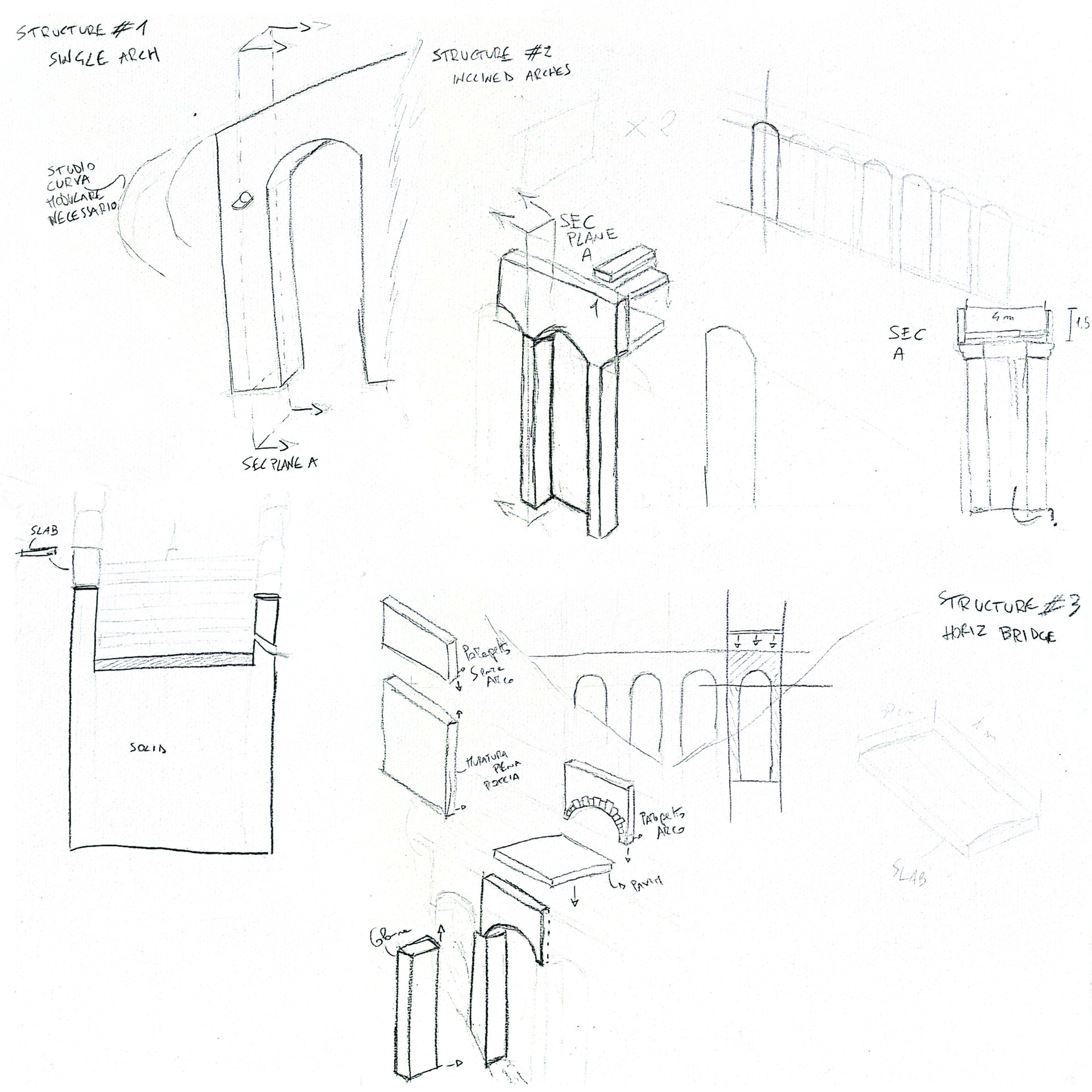
Studying the modularity of the elements was then necessary in order to create each piece one by one and to as well keep it easily editable in the future.
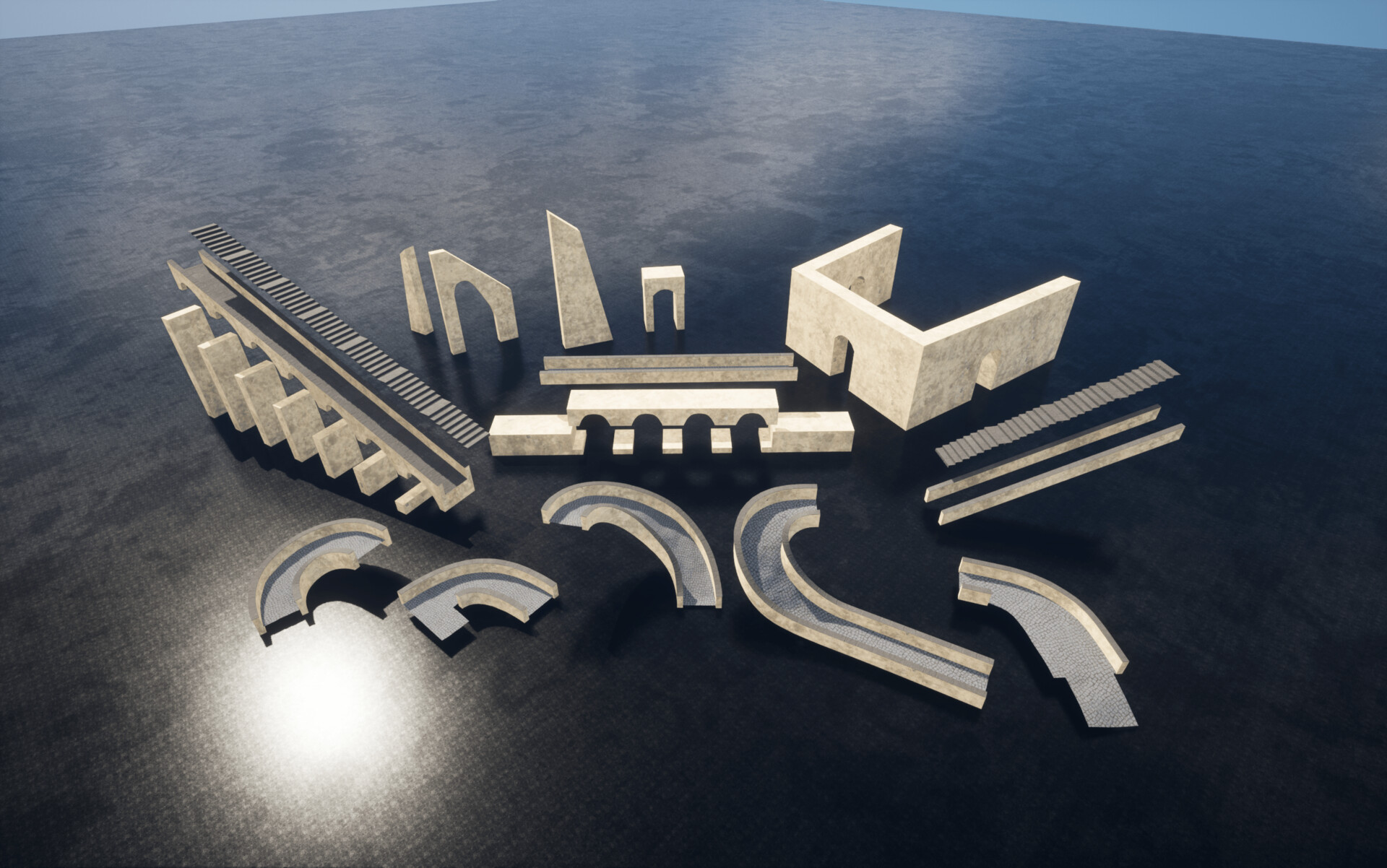
Once created the assets in Blender, a triplanar texture shader was created in Unreal Enging 5 obtaining realistic plaster and paint.

Assembly test of the project in Blender and greyboxing the Royal Palace.

Final product created in Unreal Engine 5.

Thanks to Quixel it was possible to plan the whole project knowing photogrammetric textures and 3D scans were at my disposal.

Some of the assets needed to be actually replanned because of the lack of information in the sources, but the final product ended up looking a quite reliable reconstruction overall

The staircase was entirely rebuilt starting from the existing panorama viewpoint on top of the slope, until the beach at the bottom.

Finally the Palace was reassembled using Quixel Megascans assets, and the painting viewpoint was recreated entirely, also providing a digital real-time accessibility.